Cusco / Sacred Valleyfrom $1,1005 daysup to 18 guests
Etnikas
★ 4.4 across 71 Google reviews
Publishes real medical screening detail
Read the full review →The medical reasons to skip ayahuasca entirely: antidepressants and MAOIs, psychosis and bipolar history, heart conditions, pregnancy.
 Written with Luis Quispe, Peru-based retreat facilitator
Short answer
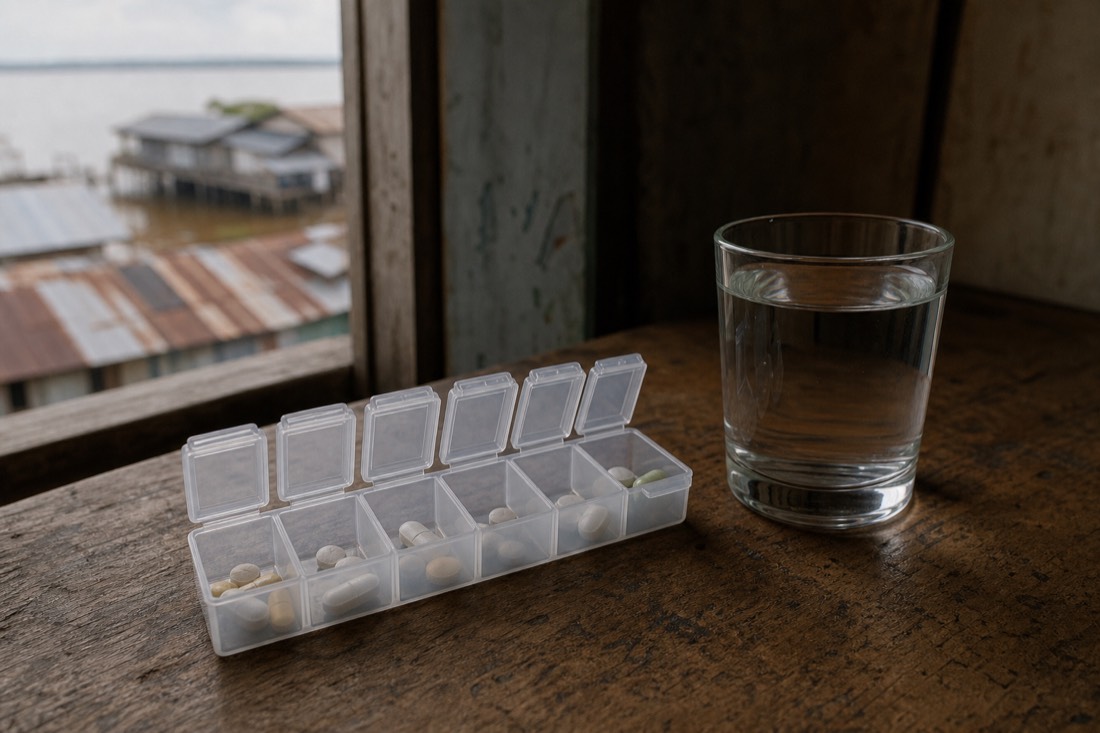
Do not drink ayahuasca if you take SSRIs, SNRIs, MAOIs or other serotonergic medication. The brew's harmala alkaloids are potent MAO inhibitors, and the combination risks serotonin syndrome, a reaction that can be fatal. A personal or family history of psychosis, schizophrenia or bipolar disorder, serious heart conditions, and pregnancy are also standard contraindications. If any of this might apply to you, talk to your doctor before you shortlist a single retreat, and never stop a medication on your own.
The most repeated follow-up question Google shows under every ayahuasca search is this one, and it deserves a blunter answer than most retreat websites give it. Some people should not drink ayahuasca at all. Not with a better shaman, not with a smaller group, not after more preparation.
Ayahuasca is not just a psychedelic tea. The vine's harmala alkaloids are potent monoamine oxidase inhibitors, which is what makes the brew work, and it is also what makes it dangerous alongside serotonergic medication. Pharmacology literature going back to Callaway and Grob's 1998 paper warns that combining ayahuasca with SSRI antidepressants may induce a serotonin syndrome with a potentially grave outcome, and recent research describes the combination as synergistic serotonergic signaling that raises that risk. Confirmed clinical cases are rare, but this is the harm-reduction consensus, and it is the reason SSRIs, SNRIs and MAOIs top every serious contraindication list.
Two things follow from this. First, honest centers ask about medication before anything else, and guidance derived from ICEERS puts the washout period at two to six weeks or more off SSRIs or SNRIs, always under medical supervision. Second, and this cannot be said strongly enough: never stop or taper a psychiatric medication on your own to attend a retreat. That decision belongs to you and the doctor who prescribed it, on the prescriber's timeline, not a retreat calendar. The MAOI content also means tyramine-rich foods interact with the brew, which is one origin of the strict pre-retreat diet.
ICEERS, the specialist NGO whose safety materials the most careful centers build on, does not recommend ayahuasca for people prone to psychosis, diagnosed with schizophrenia or bipolar disorder, or with a family history of psychosis. This is not gatekeeping for its own sake. The US Embassy in Peru has noted mental-health episodes among the ayahuasca-linked incidents involving American citizens in remote Amazon areas, and a ceremony room hours from a hospital is the worst possible place to find out how a vulnerable mind responds to a powerful psychoactive.
Family history matters here even if you have never had symptoms yourself. If psychosis or bipolar disorder runs in your family, say so on every intake form and raise it with your doctor first.
Ayahuasca raises blood pressure and heart rate. ICEERS lists serious cardiovascular conditions, including coronary disease, heart failure and stroke history, as contraindications for that reason. Pregnancy appears on the published contraindication lists of screening-focused centers alongside epilepsy and antipsychotic use, and no reputable center will knowingly serve a pregnant guest.
The screening a center runs before you arrive tells you how seriously it takes everything above. The strictest process documented in our research belongs to Temple of the Way of Light: a medical and psychological questionnaire developed with ICEERS, covering medications, cardiovascular risk and trauma, reviewed by a licensed doctor and a psychologist. Smaller centers do less but the good ones still ask: AyaSelva states that every guest completes a confidential health questionnaire plus a personal intake call, and its published list covers SSRIs, MAOIs, antipsychotics, heart disease, epilepsy, psychosis history and pregnancy.

A center that takes your booking without asking a single health question has answered your safety question for you. Our safety page walks through the full vetting checklist, and what happens at a retreat shows where screening fits in the whole arc. Unsure how any of this applies to you? Ask us and we will answer honestly, including when the honest answer is do not go.
Every entry in this table appears either in ICEERS safety materials or on the published exclusion list of a Peru center in our research files. Nothing here is speculative, and nothing missing from it is therefore safe. The brew inhibits monoamine oxidase, so the danger list runs wider than antidepressants alone.
| Drug or substance class | Documented risk | What the sources say |
|---|---|---|
| SSRIs and SNRIs | Serotonin syndrome, potentially fatal | Callaway and Grob's 1998 pharmacology paper warns the combination "may induce a serotonin syndrome with a potentially grave outcome"; 2026 research in Frontiers describes synergistic serotonergic signaling. Named on every published center exclusion list on file. |
| Pharmaceutical MAOIs | Stacked MAO inhibition on top of a brew that is itself an MAOI | Contraindicated per ICEERS; named by AyaSelva, Etnikas and the Ayahuasca Foundation. |
| Other serotonergic medications | Same serotonin-syndrome mechanism | ICEERS groups them with SSRIs and MAOIs as contraindicated. |
| Antipsychotics | Excluded by screening-focused centers | On AyaSelva's published contraindication list; the Ayahuasca Foundation's medical guidelines cover them with discontinuation timelines. |
| Blood pressure medication | The brew raises blood pressure and heart rate | The Ayahuasca Foundation publishes discontinuation timelines for blood pressure medication; Arkana excludes chronic high blood pressure outright. |
| CNS depressants | Listed by centers that publish medical guidelines | Covered with specific timelines in the Ayahuasca Foundation's participation guidelines. |
| Recreational drugs and alcohol | Barred through the preparation window | Arkana tells guests to avoid both; Dreamglade lists recent substance use and active addiction as contraindications. |
| Over-the-counter medicines and supplements | Interactions poorly mapped, so centers ask anyway | Nihue Rao asks guests to share everything they take and, with their physician, to stop OTC medicines and supplements at least three days ahead. |
| Tyramine-rich foods | MAOI food interaction | ICEERS good-practice guidance; part of the medical logic behind the pre-retreat diet. |
The way to use this table is simple: bring it, and your full medication list, to your own doctor before you email a single center. A forum cannot weigh your prescription history and neither can we. The absence of a substance from this table means our research did not cover it, not that it is compatible, and the food rows are one reason the traditional diet is stricter than it looks, which our dieta guide covers in full. And the standing rule holds everywhere on this page: never stop or change a medication on your own.
No retreat center can overrule your prescriber, and the careful ones say so plainly. What they publish is intake timing: guidance derived from ICEERS runs two to six weeks or more off SSRIs and SNRIs under medical supervision, and the strictest intake forms ask about everything taken for months back.
| Center or source | What it asks or publishes | On file |
|---|---|---|
| ICEERS-derived guidance | Two to six weeks or more off SSRIs and SNRIs, always under medical supervision | The baseline the most careful centers build on |
| Ayahuasca Foundation | Published medical guidelines with discontinuation timelines, for example SSRIs four to six weeks before | Also requires disclosure of all conditions and medications from the past year |
| AyaSelva | Live intake form asks about SSRIs, MAOIs and antipsychotics taken in the last three months | Plus a personal intake call before any booking |
| Temple of the Way of Light | Application screening covers medications alongside cardiovascular risk and trauma | Reviewed by a licensed medical doctor and a psychologist |
| Etnikas | Health questionnaire reviewed by doctors and a psychologist before booking | Publishes its contraindicated-medication lists; site warns some combinations "can cause permanent damage including death" |
| Dreamglade | Health and medication disclosure required with every inquiry, no automated screening | Its safety page states participants are responsible for consulting their own doctor before applying |
| Nihue Rao | Asks guests to share all conditions and medications with the facilitation team | Prep guidance covers stopping OTC medicines and supplements three or more days ahead, with a physician |
Read the pattern, not the numbers. The timelines above are what centers ask, not instructions you can act on alone: coming off an SSRI is a medical taper with risks of its own, and the only person qualified to plan it is the doctor who prescribes for you. The practical move is to take the center's stated policy and your retreat dates into that appointment and let your doctor answer. If the answer is no, the retreat waits. Centers that screen properly would rather postpone you than admit you mid-taper.
ICEERS does not recommend ayahuasca for anyone prone to psychosis, diagnosed with schizophrenia or bipolar disorder, or with a family history of psychosis, and that last clause covers relatives whose diagnosis you may never have discussed. The decision path below shows what the record supports; none of it replaces your doctor.
| Your situation | What the record supports |
|---|---|
| Any personal psychotic episode, or a schizophrenia diagnosis | A documented contraindication per ICEERS. Arkana states plainly that people with schizophrenia cannot participate. The honest answer is not to go. |
| Bipolar disorder, any type | ICEERS does not recommend it; Arkana excludes it; Dreamglade's published list includes bipolar I; AyaSelva's intake form asks about it directly. |
| Family history of psychosis or schizophrenia | ICEERS includes family history in its cautions, and Dreamglade lists personal or family history explicitly. Disclose it even if you have never had a symptom. |
| Depression or anxiety, currently medicated | The blocker is usually the medication itself, per the interaction table above. That is a prescriber's decision on the prescriber's timeline. |
| Depression or anxiety, unmedicated | Not on the hard exclusion lists on file, but it belongs on every intake form and in a conversation with your doctor first. |
| Trauma or PTSD | Temple of the Way of Light's questionnaire asks about trauma for a reason. Raise it in the intake call and favor centers with psychological support on staff. |
Notice what the path never leads to: shopping for a center permissive enough to take you. A ceremony room hours from psychiatric care is the worst place to test a vulnerable mind, which is what the US Embassy's mention of mental-health episodes among ayahuasca-linked incidents documents. If you disclose a psychosis history and a center accepts you anyway, that tells you about the center, not about your safety. How to vet a shaman covers the adjacent problem of who is actually holding the room.
Ayahuasca raises blood pressure and heart rate, which is why ICEERS lists coronary disease, heart failure and stroke history as contraindications. Remote geography compounds the pharmacology: the distance between a ceremony maloca and cardiac care is measured in minutes at some centers and in boat hours at others.
The exclusions are consistent wherever centers publish them. Arkana's health page states that severe heart disease and chronic high blood pressure rule out participation, with consultation required for other heart issues. AyaSelva's intake form asks about heart disease and blood pressure by name. And the one preparation-ritual death on the public record, Matthew Dawson-Clarke's in 2015, was a cardiac arrest after a tobacco purge tea, a reminder that the cardiovascular load of a retreat includes the purges and rituals around the brew, not just the brew itself. Your doctor needs that whole picture.
Distance to help is the second half of the cardiovascular question, and it varies more than most guests realize:
| Center | Distance to help, on file | Medical staffing, on file |
|---|---|---|
| Etnikas (Sacred Valley) | About an hour from Cusco, with contracts with Cusco clinics | Cardiologist, psychiatrist, psychologist, GP and emergency nurse on the team; a doctor present at ceremonies with emergency equipment |
| Caya Shobo (near Iquitos) | Roughly a 20-minute drive from Iquitos airport; emergency contact with Iquitos clinics | Equipped first-responder kits, including anti-venom; no on-site doctor stated |
| Nihue Rao (Llanchama) | About an hour from Iquitos airport | 24-hour facilitation team; no on-site medical staff mentioned |
| Temple of the Way of Light | A few hours from Iquitos by bus, boat and hike | Doctor and psychologist review every application before arrival; on-site medical staffing not published |
None of this is a reason to panic, and all of it is a reason to ask any center two questions in writing: how far is the nearest clinic, and what happens if a guest has a cardiac emergency at 2 a.m. A center with a real answer will give it without being offended.
Four deaths connected to Peru's retreat scene sit on the public record with names attached, from 2012 to 2025. Three trace to gaps that real screening and real oversight exist to close. The fourth was a killing that says more about the unregulated boom than about any intake form.
| Case | What happened | Where the system failed |
|---|---|---|
| Kyle Nolan, 18, US (2012, Shimbre, Madre de Dios) | Died during or after a ceremony; the shaman and associates buried his body to conceal the death, drawing homicide and illegal-burial charges | Total absence of oversight: no screening equal to an 18-year-old traveling alone, no emergency response, and concealment where accountability should have been |
| Matthew Dawson-Clarke, 24, NZ (2015, Kapitari, near Iquitos) | Cardiac arrest after a tobacco purge tea taken as ayahuasca preparation | Preparation rituals carry cardiovascular load too, and nothing at the scene was equal to a cardiac emergency deep in the forest |
| Olivia Arevalo, 81, and Sebastian Woodroffe (2018, Ucayali) | Woodroffe shot the elder Shipibo healer and was lynched by the community | Not a ceremony death and not a screening failure; it maps to the boom itself, an unvetted visitor inside an unpoliced scene |
| Aaron Castranova, 41, US (2025, hostel ritual, Loreto) | Died after drinking the brew at a hostel ceremony; reporting cited possible undisclosed antibiotic use | The textbook screening failure: a possible undisclosed medication, at a venue with no published intake process at all |
The four names are the documented core, not the full count. An ICEERS review compiled roughly 17 Peru-linked deaths across the 2010s, many at tourist-facing operations, and the US Embassy noted multiple American deaths and illnesses, including mental-health episodes, linked to ayahuasca in remote Amazon areas in 2024. Two things stay true at once: serious incidents are rare against the volume of ceremonies held every night, and none of the documented cases happened at a center that publishes the kind of screening detailed below. That is not proof any center is risk-free. It is evidence that intake rigor and catastrophe have so far clustered at opposite ends of the market.
Publication is the signal available to you: no Peruvian agency audits any center's screening, so a center that names its exclusions, its process and its reviewers has at least tied its public reputation to them. Here is what the screening-forward centers in our research actually put in writing.
| Center | What it publishes about screening | Who reviews it, per the center |
|---|---|---|
| Temple of the Way of Light | In-depth medical and psychological questionnaire developed with ICEERS, covering medications, cardiovascular risk and trauma | A licensed medical doctor and a psychologist |
| Etnikas | Pre-booking health questionnaire plus detailed published contraindication lists | Doctors and a psychologist before booking; cardiologist, psychiatrist, GP and emergency nurse on the wider team |
| Arkana | Named exclusions: schizophrenia, bipolar disorder, severe heart disease, chronic high blood pressure; consultation required for chronic conditions | Medical oversight credited to a named doctor, Dr. Arturo Sáenz |
| Caya Shobo | Safety page states it carefully reviews "medications, substances or psychological and physical conditions which may be contraindicated"; publishes its ratio of one shaman per four guests plus two to three facilitators | Facilitation team, with emergency contacts at Iquitos clinics |
| AyaSelva | Confidential health questionnaire plus a personal intake call; published list covers SSRIs, MAOIs, antipsychotics, heart disease, epilepsy, psychosis history and pregnancy | The founding team; process self-reported |
| Ayahuasca Foundation | Medical guidelines with named discontinuation timelines and disclosure of the past year's conditions and medications | Serious issues discussed with facilitators and the curandero |
| Dreamglade | Published contraindication list running from SSRIs to bipolar I to pregnancy and recent surgery | The owner reviews every inquiry personally, no automated screening |
| Nihue Rao | Registration form; asks guests to share all conditions and medications | Facilitation team |
| Blue Morpho | Emphasizes safety standards and personalized preparation; no public questionnaire or contraindication list surfaced in our research | Not published |
One caveat belongs in bold type: every row above is the center's own claim about its own process. Publication is necessary evidence of seriousness, not sufficient proof of enforcement, because nobody independently audits any of it. The comparison table holds the same screening field alongside price, group size and ceremony count for every center we track, which makes the blank cells as informative as the full ones.
Luis Quispe has supported international retreat guests since 2022 and facilitated since 2023, more than a thousand participants by his own count, and the omissions repeat: antidepressants left off forms, drinking habits minimized, a parent's psychiatric history unmentioned. People hide what they fear will disqualify them, which is exactly what screening exists to find.
The logic guests bring, in Luis's experience, is that the form is a formality and the trip is already booked in their heart. So the antidepressant becomes "an old prescription", the nightly drinks become "social", and the supplements do not get mentioned because nobody thinks fish oil and a sleep aid count as medication. He is not in a position to judge any of it medically, and does not: his job is guest support, and what he sees from that seat is that every one of those omissions lands on the table of whoever is responsible for the guest during a ceremony. The Castranova case, where reporting cited possible undisclosed antibiotic use, is the version of this story with the worst possible ending.
His advice to guests fits in one sentence: fill in every form as if the reader is the person who will be sitting beside you at 2 a.m., because that is who reads it. A disclosure that gets you turned down by an honest center would not have been safer at a center that never asked. And the intake conversation runs both ways, so Luis tells guests to arrive with their own questions:
| Question to ask any center | Why it matters |
|---|---|
| Will you take my full medication and health history, and who reviews it? | The screening baseline; the centers above publish exactly who reads their forms |
| What is your stated policy on medication timing? | Not so you can act on it yourself, but so your doctor has the center's dates and rules in hand |
| What is the facilitator-to-guest ratio? | Caya Shobo publishes one shaman per four guests; most centers make you ask |
| How far is the nearest clinic, and what is the evacuation plan? | Distance to care runs from 20 minutes to several hours across centers on file |
| Are female facilitators present, with no solo shaman-guest sessions? | An ICEERS checklist item, and the pattern documented in press reporting on misconduct makes it non-optional, especially for solo women |
| Do you ever turn applicants down? | A center that never rejects anyone is not screening, it is booking |
If you have already emailed a center and something in its answers felt loose, send us the thread and we will tell you what we would ask next, free.
For readers whose doctor has said yes and who want the screening side done properly, these are the three centers with the strongest published screening record in our files. No pressure attached; two of them cost several times the market's entry price, and the point of this page is who should not go at all.
Centers our research points to for this topic. Nobody pays for placement; every card links our full, sourced review.
Cusco / Sacred Valleyfrom $1,1005 daysup to 18 guests
★ 4.4 across 71 Google reviews
Publishes real medical screening detail
Read the full review →Iquitos / Amazonfrom $4,44012-day flagship; multi-week intensivesgroups of around 20
★ 4.8 across 94 AyaAdvisors
Publishes real medical screening detail
Read the full review →Iquitos / Amazonfrom $1,580from 6 days
★ 4.9 across 77 TripAdvisor
Directory-listed
Read the full review →Not on your own, ever. Washout guidance derived from ICEERS runs two to six weeks or more, and coming off an SSRI or SNRI carries its own risks that only your prescribing doctor can weigh. If your doctor advises against stopping, that is your answer.
The careful ones do. Temple of the Way of Light has a doctor and psychologist review every application; AyaSelva states it uses a health questionnaire plus an intake call. Screening quality varies widely and is self-reported, so treat a center that asks nothing as a warning sign.
Because the brew contains MAO inhibitors, tyramine-rich foods can interact with it. The traditional dieta's restrictions overlap with that pharmacological caution, which is one reason centers ask guests to follow it strictly.
That is a question for your doctor, not a website. The documented hard contraindications are serotonergic medications, psychosis-spectrum and bipolar history, serious heart conditions and pregnancy. Anything touching your mental health belongs in a conversation with a professional who knows your history.