Iquitos / Amazon$1,200–$1,8007 or 12 daysmax 6 guests
AyaSelva Our pick
★ 5 across 29 Google reviews
Publishes real medical screening detail
Read the full review →The real shape of a Peru retreat, day by day: evening ceremonies with a curandero, 4 to 6 hour effects, the dieta, plant baths and integration circles.
 Written with Luis Quispe, Peru-based retreat facilitator
Short answer
An ayahuasca retreat is built around group ceremonies held in the evening, where guests drink the bitter tea under the guidance of a curandero and feel its effects for roughly 4 to 6 hours. Retreats run from a single day to several weeks; a typical first-timer week in Peru includes 3 or 4 ceremonies on alternating nights. The days between are quiet and structured: a restricted diet, plant baths, rest, and group sharing sessions to process what came up.
The word retreat undersells how structured these weeks are. You do not simply show up in the jungle and drink; every serious center in Peru runs a rhythm of preparation, ceremony and recovery that has more in common with a clinical protocol than a holiday. Here is that rhythm, drawn from the verified programs in our research.
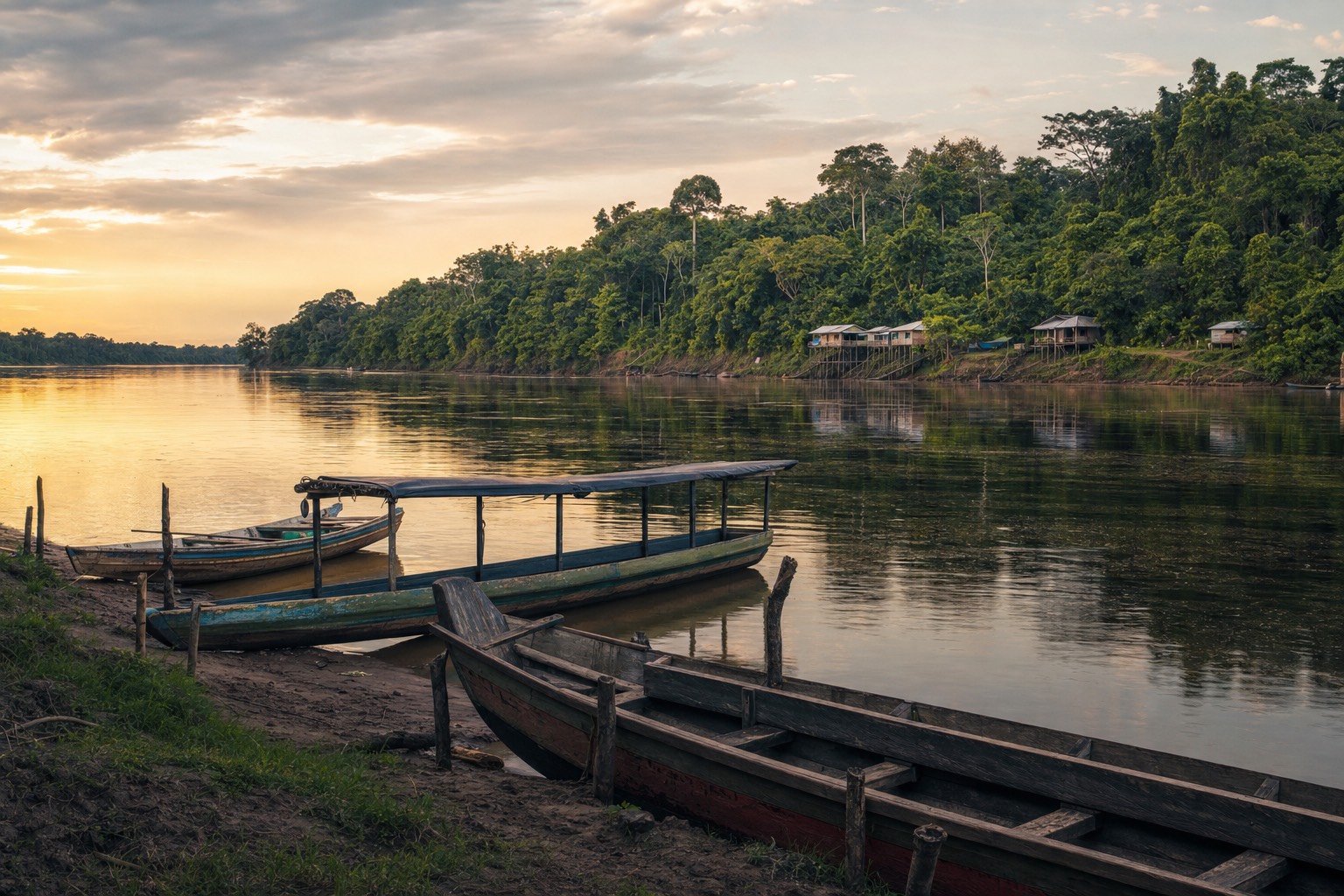
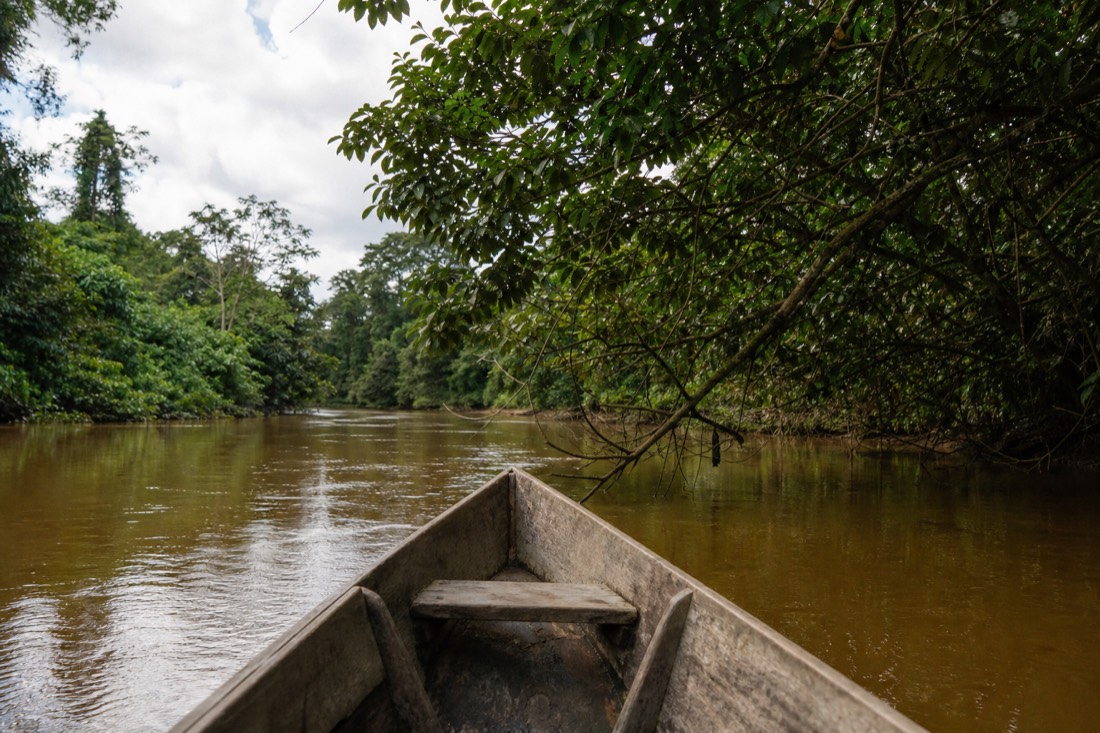
Getting there is part of the design. At AyaSelva, the small center near Iquitos we know best, guests are picked up at the airport, spend one night in Iquitos, then travel by boat the next morning to the center in Tamshiyacu. Remote locations are normal: Nihue Rao sits about an hour from the Iquitos airport in Llanchama, and centers around Pucallpa and the Sacred Valley follow the same pattern of a town arrival followed by a transfer into quiet.
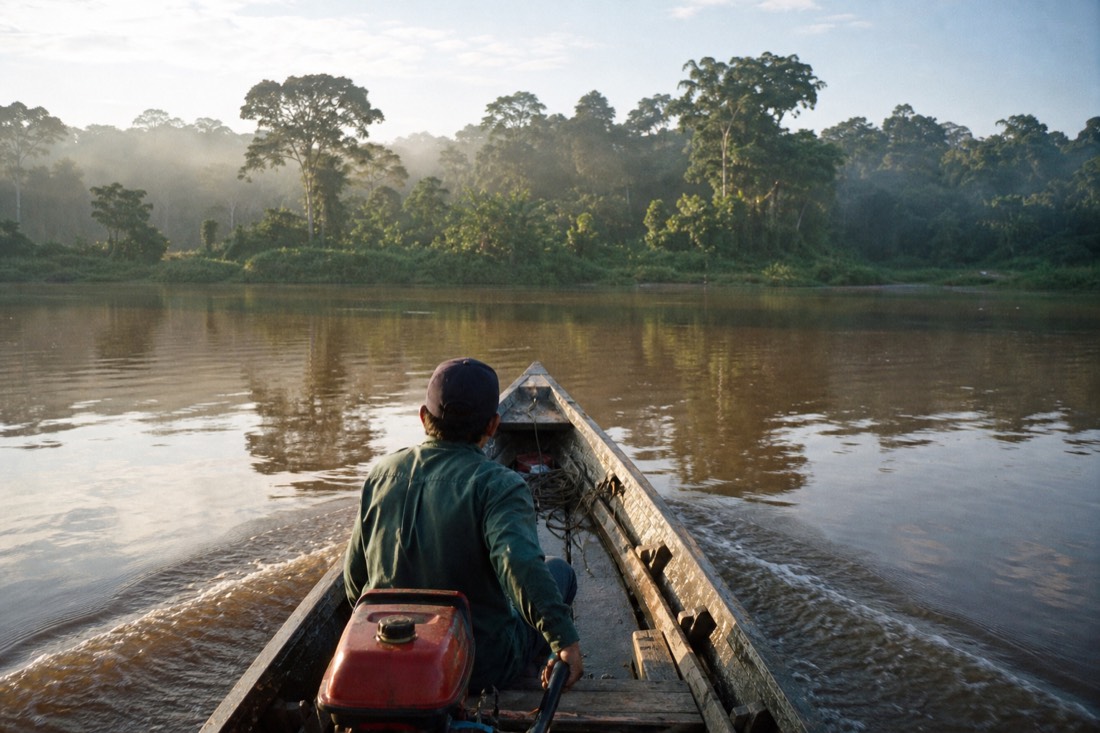
Once you arrive, the week alternates between ceremony nights and rest days. Dreamglade runs ceremonies on Mondays, Wednesdays and Fridays, three to six depending on your length of stay. AyaSelva's 7-day program holds 4 ceremonies; its 12-day program holds 7. Nobody serious serves the medicine every night. Group size shapes the feel of it all: six guests maximum at AyaSelva, ten at Dreamglade, around twenty at Temple of the Way of Light.
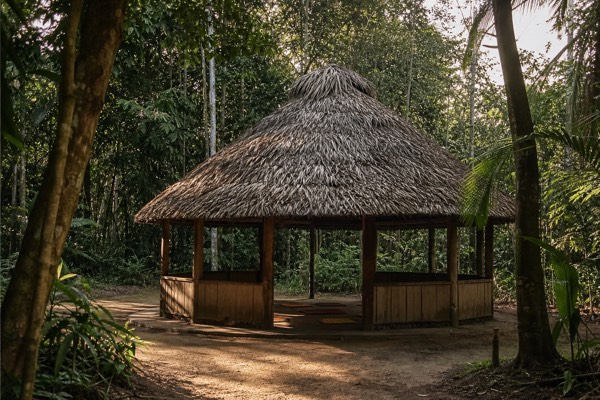
Ceremonies begin after dark in the maloca, the round ceremonial hall. Guests each drink a cup of the tea, thick and bitter, then return to a mattress along the wall while the curandero begins to sing icaros, the medicine songs that structure the whole night. Effects come on over the first hour and run roughly 4 to 6 hours in total, which is why ceremonies start in the evening and end deep in the night.
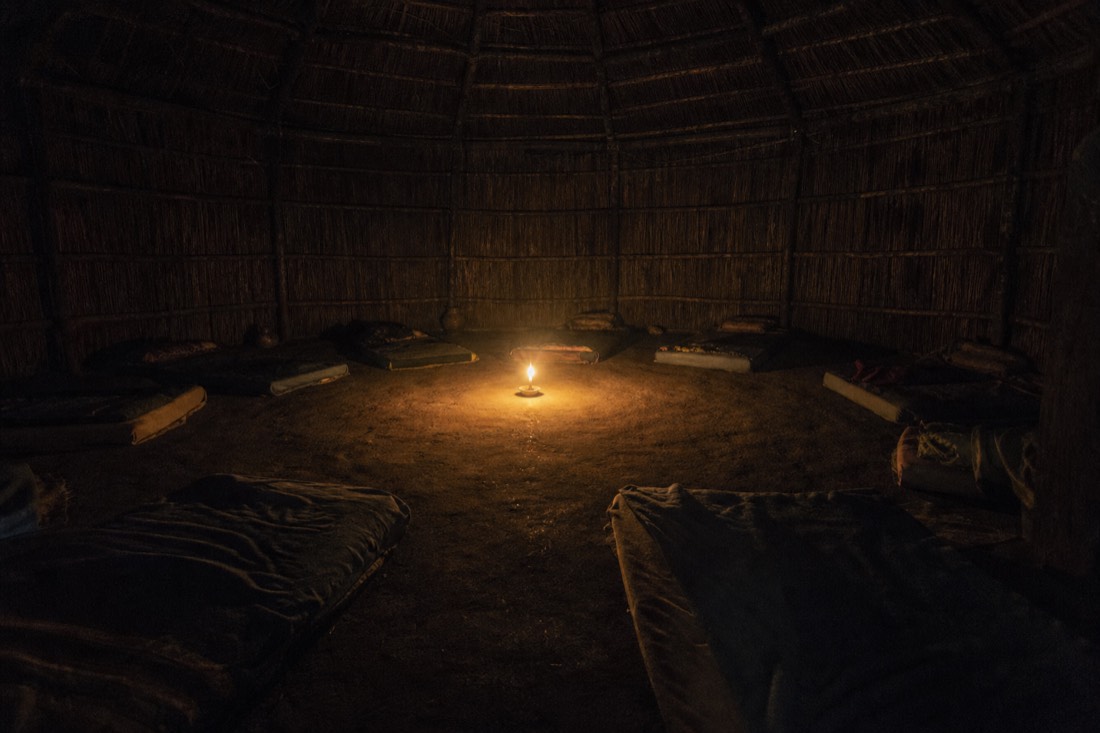
Purging is expected rather than exceptional, and every mattress comes with a bucket; we cover that side honestly in do you always throw up with ayahuasca. Facilitators stay in the room throughout, and when the effects taper, you sleep where you are or walk back to your room. The full timeline, from first effects to the next morning, is in how long does an ayahuasca trip last.
The off days are not filler; centers treat them as where the actual integration starts. Food follows the dieta, the traditional preparation diet: bland, restricted meals without salt or sugar, alongside abstinence rules that guests are asked to hold for the whole stay. Centers focused on deeper work extend this into master plant dietas, weeks-long commitments to a single teacher plant that are the specialty at Nihue Rao.
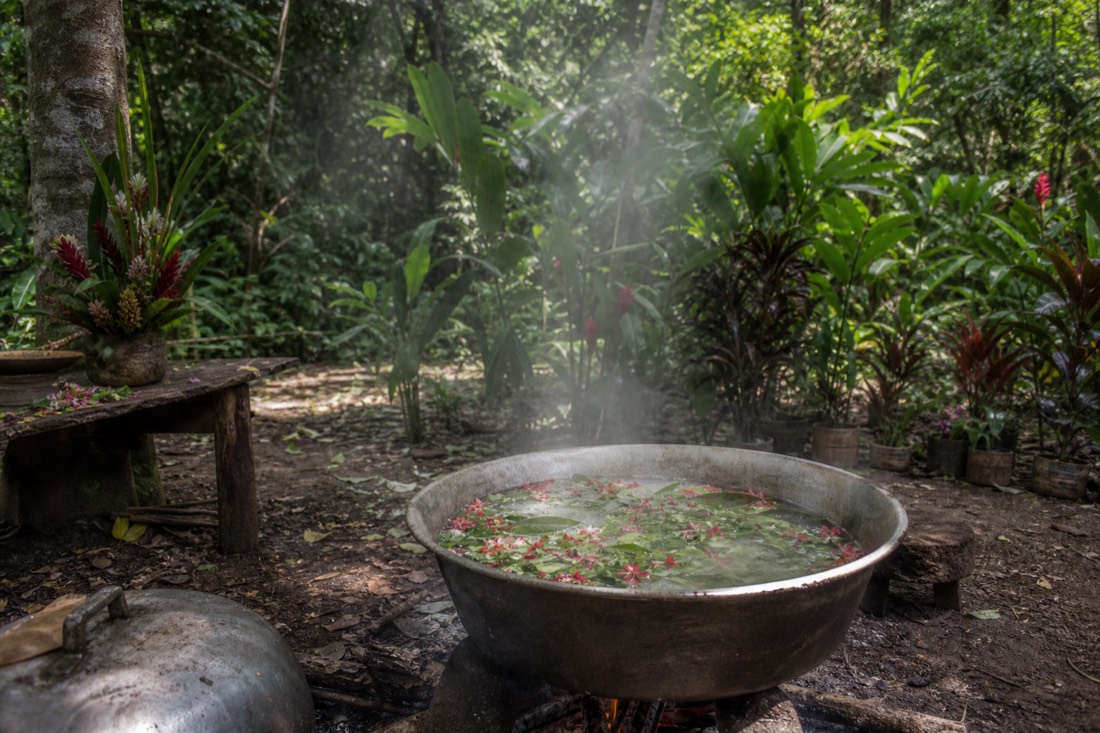
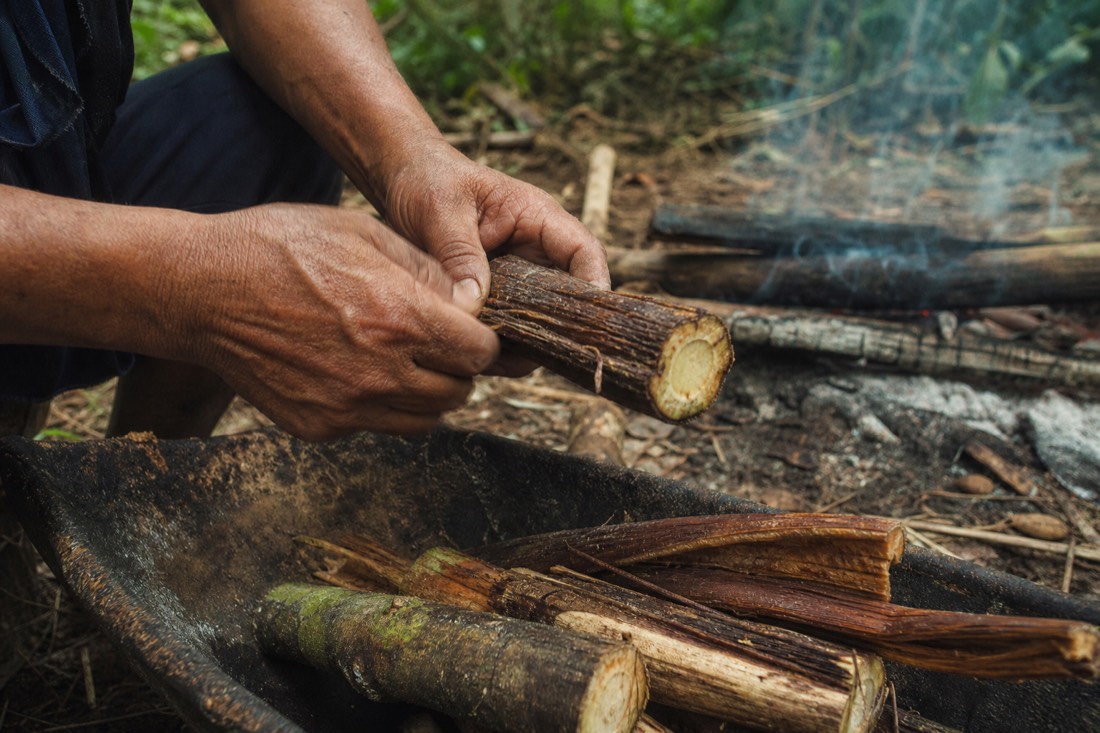
Daytime practice varies by center but draws from the same well. Selva Madre pairs its ceremonies with botanical tours and plant and flower baths; AyaSelva's week includes flower baths, jungle walks, meditation, a fire ceremony and the chance to help cook the medicine itself, vine and chacruna only, prepared on site. Group sharing circles sit between ceremonies so guests can say out loud what the night showed them before the next cup.
The person leading ceremony is the retreat, more than the facilities ever will be. In Peru that usually means a curandero or curandera working in a family lineage: Shipibo healers like Dreamglade's Maestra Dominga and Maestro Raul, whose Pucallpa lineage spans more than forty years, or Mestizo curanderos like Arnaldo at AyaSelva, raised in Tamshiyacu. Ask any center directly who serves the medicine and how they trained; the good ones answer in specifics.
Before any of this, a real center screens you: health questionnaire, medication history, sometimes a call. If you are a first-timer wanting the small-group, heavily-screened version of the week described here, our AyaSelva review explains why it is our pick, and the comparison table shows how every center we track structures its program. Still cannot picture which format fits you? Describe your situation to us and we will match the format to it, free.
Arrival day is travel and settling, and the center handles most of it: at every verified Iquitos program you land in the city and staff move you the last stretch by road or boat. AyaSelva adds a night in Iquitos before the morning boat, Dreamglade meets guests at a city meeting point, and Nihue Rao drives you about an hour from the airport.
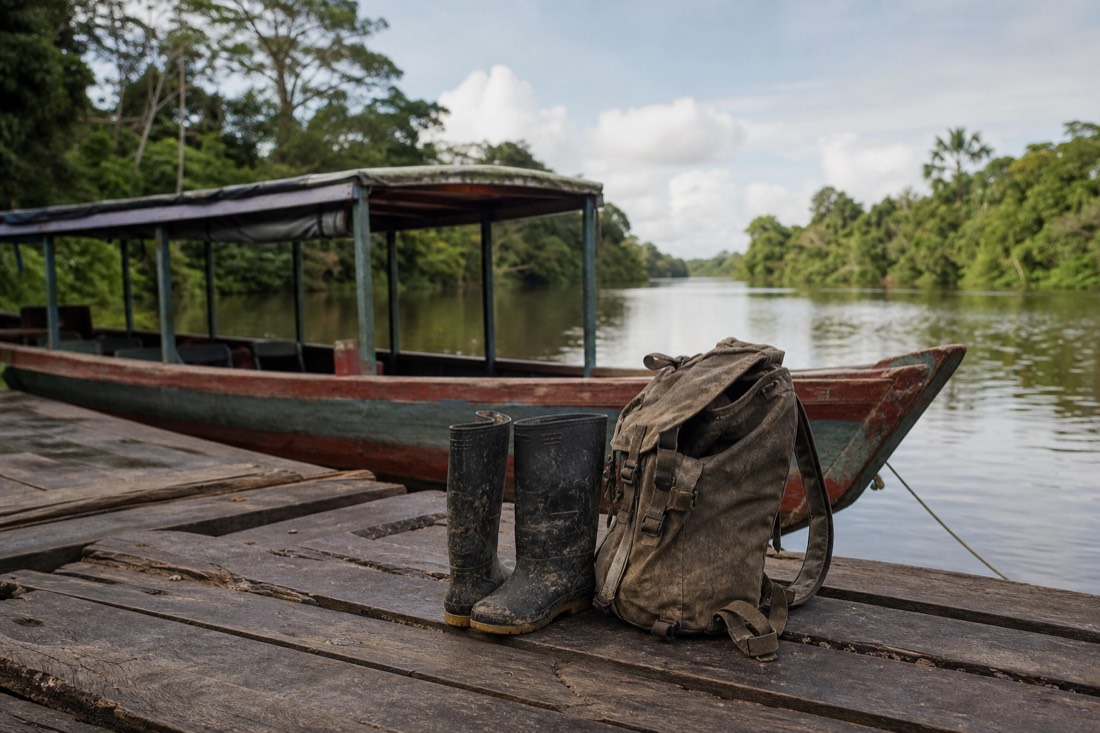
The last mile is where the practical differences live, and they are worth knowing before you book flights. Some centers include the airport run, some do not, and one asks for a genuine hike.
| Center | Gateway city | The last stretch, as published |
|---|---|---|
| AyaSelva (Tamshiyacu) | Iquitos | Airport pickup, one night in Iquitos, boat to the center next morning, all handled by the hosts |
| Dreamglade | Iquitos | Group transport from a city meeting point on Mondays and Fridays; the airport-to-city leg is yours, about 30 to 70 soles by taxi or mototaxi |
| Nihue Rao (Llanchama) | Iquitos | Pickup at the airport or your hotel by motorcar, roughly an hour, with a short boat ride in the wet season |
| Temple of the Way of Light | Iquitos | A few hours by bus, boat and a hike into the Loreto rainforest |
| Selva Madre | Iquitos | Airport or hotel pickup included; retreats start Mondays and Thursdays |
| Etnikas (San Salvador) | Cusco | Private transport, about an hour from the city into the Sacred Valley |
The two regions ask different things of your body on day one. Iquitos hands you jungle heat and a boat schedule; Etnikas sits in the high Andes about an hour from Cusco, roughly two hours from Machu Picchu, so altitude is part of the arrival math there. The first evening itself is deliberately unremarkable: your room or tambo, a walk-through of the grounds, the first diet-compliant meal. The screening that decides whether you drink at all happened weeks earlier, over a questionnaire and often a call. Dreamglade states that Paul reviews every inquiry personally, and AyaSelva pairs its confidential health form with a personal intake conversation before anything is confirmed.
Take an 8pm cup as the anchor and the on-file figures write the night for you: effects arrive between 8:20 and 9, the strongest stretch fills the middle hours, and somewhere between midnight and 2am the 4 to 6 hour arc closes. Staff never hurry that pace; the room follows the tea.
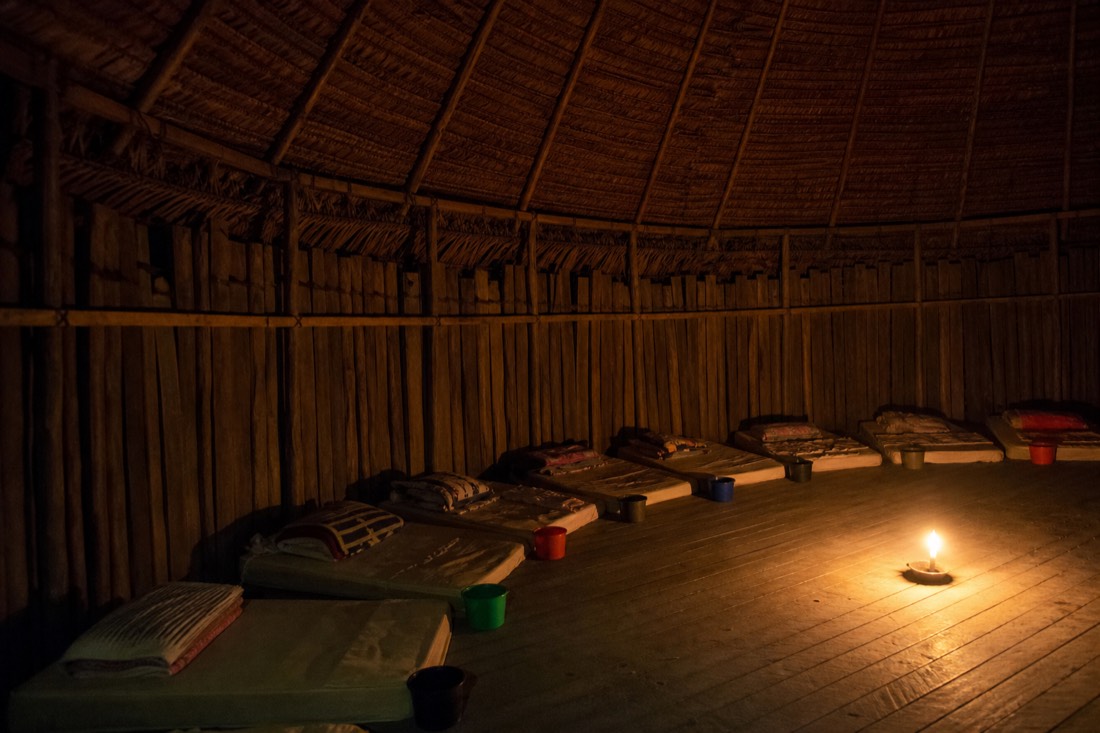
The table below is a worked example built on the clinical onset and duration figures, not a schedule any single center publishes. Real nights drift earlier or later, but the shape holds.
| Hour | What is happening |
|---|---|
| Early evening | Guests settle onto mattresses in the maloca; each place has a bucket close by |
| Around 8pm | The cup goes around, one guest at a time, and the room goes quiet |
| 8:20 to 9pm | The published onset window, 20 to 60 minutes after drinking; the curandero begins the icaros |
| Roughly 9pm to midnight | The strongest hours; purging is common here; facilitators stay in the room |
| Midnight to 2am | Effects step down gradually as the 4 to 6 hour total runs out |
| Deep night | Guests sleep where they are or walk back to their rooms |
| Next morning | Slow start, light food within the diet, and at most centers a sharing circle |
Two guests on neighboring mattresses can live very different versions of that timeline, partly because doses are not uniform. Reddit's retreat veterans repeatedly praise curanderos who adjust the pour per guest rather than serving one size to the room. The songs holding it together have their own deep history, which we unpack in Shipibo lineage and icaros.
A 7-day retreat is two or three travel-and-rest days wrapped around three or four ceremony nights, always alternating. Built on Dreamglade's published Monday, Wednesday, Friday rhythm, the week runs ceremony, recovery, ceremony, recovery, ceremony, then a full day to land. AyaSelva fits a fourth ceremony into the same seven days.
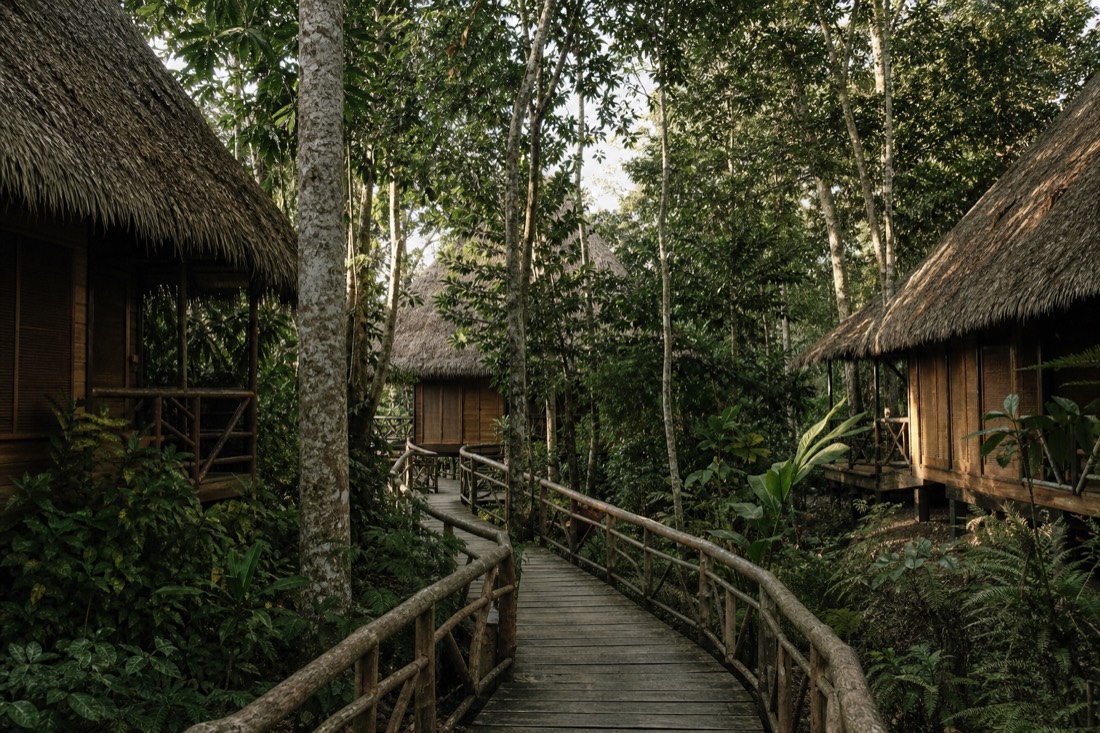
Here is a Monday-start week on the Dreamglade cadence, drawn from its published schedule of Monday, Wednesday and Friday ceremonies with guests joining on Mondays or Fridays. Treat it as a worked example of the rhythm, not a printed itinerary.
| Day | Daytime | Evening |
|---|---|---|
| Monday | Meet in Iquitos, group transfer to the lakeside center, settle into your tambo | Ceremony 1 |
| Tuesday | Slow morning, rest, integration conversation | Free |
| Wednesday | Quiet day; breathwork or sauna | Ceremony 2 |
| Thursday | Rest, time by the lake | Free |
| Friday | Light day, kept deliberately empty | Ceremony 3 |
| Saturday | Sharing, integration, packing | Free |
| Sunday | Transport back to Iquitos | Travel |
Other centers bend the same shape without breaking it. AyaSelva's published 7-day week holds 4 ceremonies and threads the off days with jungle walks, flower baths, meditation, a fire ceremony and a day spent helping cook the medicine. Nihue Rao runs the densest verified cadence, 4 ceremonies a week in a Monday, Tuesday, Thursday, Friday block, so its guests get back-to-back nights with a midweek pause.
Across nine verified programs the pattern holds at roughly one ceremony per two nights: 2 in a 3-day stay, 3 or 4 in a week, 5 to 7 across 11 or 12 days, and up to 16 in a month. Centers add length by adding recovery days, not extra drinking nights.
The ladder below comes straight from the programs each center publishes.
| Center | Length | Ceremonies on file |
|---|---|---|
| Etnikas | 3 / 5 / 7 days | 2 / 3 / 3, with a Machu Picchu visit on the 7-day |
| Selva Madre | 3 to 30 days | 2 (3-day), 4 (7-day), 6 (10-day), 8 (15-day), 12 (21-day), 16 (30-day) |
| AyaSelva | 7 / 12 days | 4 / 7 |
| Dreamglade | 5 nights to 2 weeks | 3 to 6 on the Mon/Wed/Fri rhythm |
| Blue Morpho | 6 days | 3 ayahuasca plus 1 San Pedro, or 2 and 2 |
| Arkana | 7 days | 4 ayahuasca, plus hape and other medicines |
| Nihue Rao | 7 days to 3+ months | 4 minimum; 6 to 12 across 11 to 21 days; 16 to 32 over 1 to 2 months |
| AYA Healing Retreats | 11 days | 5 |
| Temple of the Way of Light | 8 / 12 days | about 4 on the 8-day; an intensive schedule on the 12-day flagship |
Group size scales alongside the count. Temple of the Way of Light hosts around 24 guests but splits ceremonies into groups of about 12, while AyaSelva's entire retreat is smaller than one of those halves. The count you need is a separate question from the count on offer, and it depends on what you are coming to work on. We walk through that decision in how many ayahuasca ceremonies do you need.
The published center descriptions agree on the job: the curandero serves the cup, sings, and works the room, while a support team stays present and sober from the first pour until the last guest sleeps. Selva Madre puts three healers and three abstaining staff in every ceremony; Etnikas adds a doctor with emergency equipment.
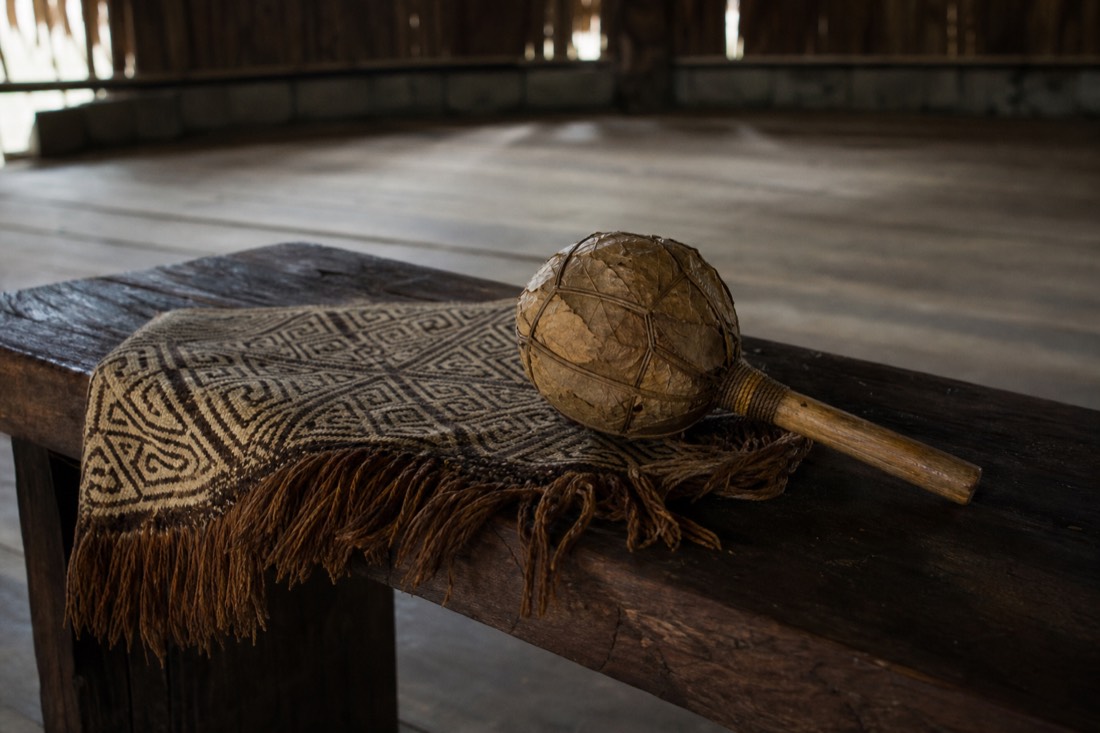
Who is actually in the room varies more than first-timers expect, and it is one of the most honest windows into how a center operates.
| Center | Who leads | Also present, per the center |
|---|---|---|
| Dreamglade | Maestra Dominga and Maestro Raul, every ceremony | A support team; the center states no ceremony runs beyond ten guests |
| Selva Madre | Three Aguaruna healers of the Rimachi family | A dedicated team of three staff who abstain during ceremony |
| Etnikas | 2 to 4 healers | A doctor with emergency equipment; physical checks before and after; overnight monitoring |
| Nihue Rao | Maestro Ricardo Amaringo and family shamans | A 24-hour support team; each guest receives a personal icaro |
| Temple of the Way of Light | Several Shipibo healers, women and men | Western facilitators; ceremony groups of about 12 |
| AyaSelva | Curandero Arnaldo | The host family; the room holds six guests at most |
What rarely gets published is a hard facilitator-to-guest ratio. Dreamglade says guests are never alone but gives no number, and Nihue Rao publishes no ratio either. That gap is exactly why our vetting advice in how do you know if a shaman is legitimate tells you to ask the question directly and in writing.
Stricter than most first-timers expect, and it starts before you fly. Dreamglade publishes a two-week pre-retreat diet and Nihue Rao a ten-day one, both cutting pork, red meat and alcohol, with fermented foods, added sugar, salt, dairy or caffeine joining the list depending on the center.
| Center | Preparation starts | What the published rules exclude |
|---|---|---|
| Dreamglade | 2 weeks before arrival | Pork, red meat, alcohol, recreational substances, fermented foods, added sugar, salt |
| Nihue Rao | 10 days before arrival | Pork, red meat, dairy, alcohol, caffeine and sex; a soft-food diet on site; it also advises stopping over-the-counter medicines and supplements at least 3 days ahead, with your own doctor consulted first |
| AyaSelva | On site | Meals stay diet-compliant throughout; vegetarian, vegan and gluten-free are possible |
| Selva Madre | On site | Organic, ayahuasca-friendly meals across the stay |
The baths follow their own cadence. Nihue Rao schedules flower baths twice a week and a purgative early in the stay, Selva Madre pairs its floral baths with a mud bath, and AyaSelva folds flower baths into the off days. None of this is decoration; centers treat the baths and the food as part of the same preparation the ceremonies depend on. The full logic of the diet, food list included, is in the dieta explained.
More than rest. Every verified program publishes a daytime layer, from Dreamglade's breathwork and sauna to Etnikas' volunteering projects and AyaSelva's day spent helping cook the medicine. The daytime schedule is where centers differ most, which makes it a fair tiebreaker between two otherwise similar weeks.
| Center | Published daytime activities |
|---|---|
| AyaSelva | Jungle walks, flower baths, meditation, a fire ceremony, learning to cook the medicine, sharing sessions |
| Dreamglade | Breathwork, sauna, integration support, a lakeside setting to do nothing in |
| Nihue Rao | Flower baths twice weekly, one-on-one time with the maestro, integration conversations three times a week, group sharing |
| Selva Madre | Botanical walks, floral baths, a mud bath, one-on-one consultations |
| Temple of the Way of Light | Yoga and classes alongside integration support |
| Etnikas | Volunteering with its non-profit, Inca meditation, a Machu Picchu visit on the 7-day |
Pack for the daytime as much as the ceremonies; our packing list covers what the jungle and the Sacred Valley each demand.
Luis Quispe has supported international guests at Peruvian retreats since 2022 and facilitated professionally since 2023, with more than a thousand participants by his own count. The surprises he sees repeat.
The first is how much of the week is daytime. Guests arrive braced for ceremony and find a calendar that is mostly quiet days, and the adjustment takes a day or two. The second is the intake itself: people are startled that the medication and health questions get read closely and followed up, when they expected a formality. Luis treats that as the best early signal a center is serious.
The tiredness surprises people too. Mornings after ceremony are slower than anyone plans for, and the guests who booked calls home or work check-ins mid-retreat regret it. Then there is the dieta's reach, since the published rules start one to two weeks before the flight, not at the lodge door. Last, the quiet days turn out to be social in a way first-timers do not expect: the sharing circles do a share of the work the ceremony starts.
If you are unsure which of these structures fits you, describe your situation to us and we will match a program to it, free.
Centers our research points to for this topic. Nobody pays for placement; every card links our full, sourced review.
Iquitos / Amazon$1,200–$1,8007 or 12 daysmax 6 guests
★ 5 across 29 Google reviews
Publishes real medical screening detail
Read the full review →Iquitos / Amazonon request5 nights to 2 weeksmax 10 guests
★ 5 across 182 Google reviews
Confirmed operating in 2026
Read the full review →Iquitos / Amazonfrom $1,6007 days to 3+ months
rating not on file yet
Confirmed operating in 2026
Read the full review →Week-long programs on file run 3 to 4 ceremonies, longer ones more: AyaSelva holds 4 in 7 days and 7 in 12, Dreamglade 3 to 6 depending on stay length, and Temple of the Way of Light runs an intensive multi-ceremony schedule across 12 days.
No. Ceremonies alternate with rest days at every verified center in our research; Dreamglade's Monday, Wednesday and Friday cadence is typical. The off nights exist so your body recovers and the experience gets processed.
The traditional preparation diet around ceremonies: bland food without salt or sugar, plus abstinence commitments, held for the retreat and often for days before it. Master plant dietas are the extended version, weeks focused on one teacher plant, offered at centers like Nihue Rao.