Iquitos / Amazon$1,200–$1,8007 or 12 daysmax 6 guests
AyaSelva Our pick
★ 5 across 29 Google reviews
Publishes real medical screening detail
Read the full review →Effects begin 20 to 60 minutes after drinking and last roughly 4 to 6 hours. The full ceremony-night timeline, what changes it, and the day after.
 Written with Luis Quispe, Peru-based retreat facilitator
Short answer
Ayahuasca's effects usually begin 20 to 60 minutes after drinking and last roughly 4 to 6 hours. Ceremonies start in the evening, so most people are through the peak by the middle of the night and sleep at the center afterward. Duration shifts with the strength of the brew, the size of the dose and your own response, which is one reason retreats space ceremonies out with rest days rather than serving the medicine nightly.
The clock matters more with ayahuasca than with almost any other part of a retreat, because the whole night is built around it. Ceremonies start after dark for a reason: by the time the effects fade, it is deep night, and the schedule hands you straight to sleep.
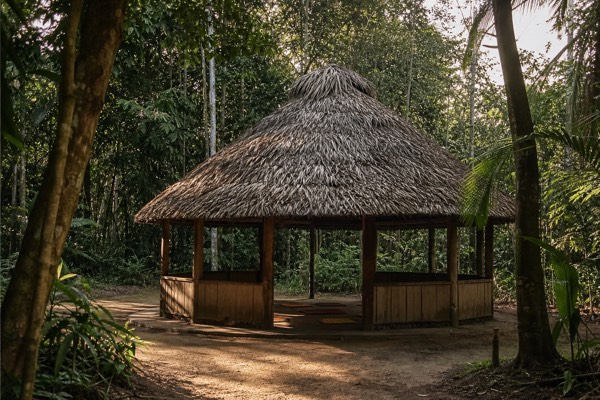
The commonly cited clinical figures, the same ones Google surfaces from sources like WebMD, put onset at 20 to 60 minutes after drinking and total duration around 4 to 6 hours. In a Peruvian maloca that maps to a night like this: the cup goes around in the evening, the room goes quiet, and somewhere inside the first hour the medicine arrives, often announced by the curandero beginning the icaros. The strongest stretch sits in the middle hours, frequently accompanied by purging, and then the effects step down gradually rather than switching off.
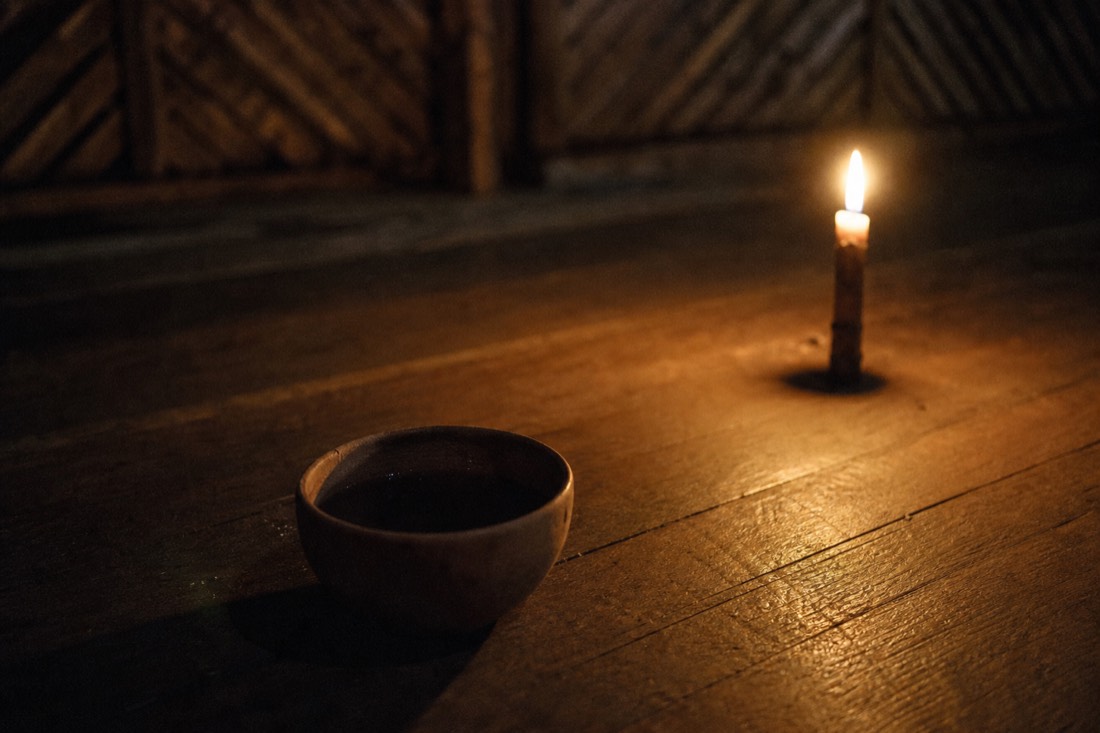
By the four to six hour mark most guests are back in ordinary awareness, tired and usually ready to sleep where they are. Facilitators stay through all of it; nobody locks up and leaves at a set hour.
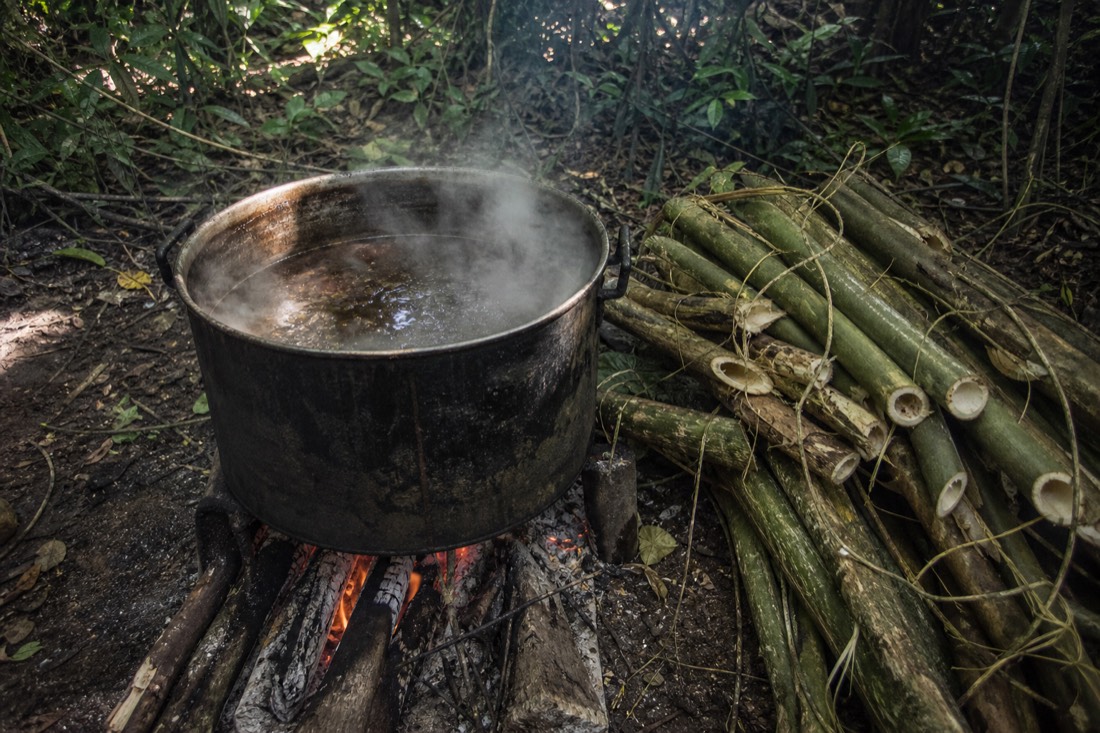
The brew itself is the biggest variable. There is no standard dose of ayahuasca: recipes, concentrations and cup sizes differ between centers, which is one reason careful drinkers ask what is actually in the pot. AyaSelva, for instance, cooks its medicine on site from vine and chacruna only. The pharmacology explains the rest: chacruna supplies DMT, and the vine's harmala alkaloids are potent MAO inhibitors that keep it orally active, stretching what would otherwise be a short-lived compound across hours.
Your own body sets the other half of the equation. Sensitivity varies widely person to person and night to night, and Reddit's retreat veterans consistently praise centers whose curanderos adjust dose per guest rather than pouring one size for the room. This is also where the medical warnings live: the same MAO inhibition that gives the brew its duration is what makes it dangerous with antidepressants, so read who should avoid ayahuasca before you book anything.
The trip ends at night, but retreats budget the whole next day for landing. Mornings after ceremony are slow: rest, light food within the dieta, and at most centers a group sharing circle where guests put words to the night while it is fresh. That processing time is not padding, it is the reason programs alternate nights instead of stacking them. Dreamglade holds ceremonies Monday, Wednesday and Friday; AyaSelva spaces 4 ceremonies across 7 days and 7 across 12.
Multi-ceremony pacing is also why a longer retreat is not just more of the same: each night builds on a day of recovery and reflection rather than on the raw end of the last trip. The full weekly rhythm, dieta included, is laid out in what happens at an ayahuasca retreat. If you are weighing a 7-day against a 12-day program and cannot decide, ask us and we will give you a straight recommendation for free, or browse the comparison table to see every center's ceremony count side by side.
Three numbers govern the night, all from the commonly cited clinical figures: onset 20 to 60 minutes after drinking, a peak through the middle hours, and 4 to 6 hours of total effects. Everything a retreat schedules, the evening start, the buckets, the quiet next morning, follows from those windows.
Anchored to an 8pm cup, the same figures Google surfaces from sources like WebMD lay out like this. Real nights drift, but the proportions hold.
| Window | Clock, for an 8pm cup | What the figures say |
|---|---|---|
| Drinking | 8pm | A single cup; sizes and strengths differ by center |
| Onset | 8:20 to 9pm | Effects begin 20 to 60 minutes after drinking |
| Peak | Roughly 9pm to midnight | The strongest stretch sits in the middle hours; purging is most common here |
| Taper | Midnight to 2am | Effects step down gradually toward the 4 to 6 hour total |
| After | Deep night | Ordinary awareness returns; guests sleep at the center |
The taper is the part first-time planners forget. The night does not end when the peak does, and centers build their whole staffing pattern around guests who are still somewhere inside the arc at 1am. The centers that publish medical staffing hang it on the same clock: Etnikas states a doctor is present through ceremonies with emergency equipment and that guests are monitored overnight, which only makes sense for an experience that runs past midnight by design.
Because the brew is not a standardized product. Every center cooks its own recipe at its own strength and pours by judgment, not milligrams. AyaSelva publishes a vine-and-chacruna-only brew cooked on site, Niwe Rao Xobo a pure nixi and chacruna one, and Blue Morpho describes proprietary brews of its own.
That is why duration questions never get exact answers, only factors. Here is how the on-file evidence sorts them.
| Factor | What is on file | Practical effect on the night |
|---|---|---|
| The brew | No standard recipe exists; AyaSelva cooks vine and chacruna only, Niwe Rao Xobo serves pure nixi and chacruna, Blue Morpho runs proprietary brews | Strength varies center to center; ask what is in the pot |
| The dose | Reddit's retreat veterans single out curanderos who adjust the pour per guest | Two people in the same maloca can have different nights |
| Your response | Sensitivity varies person to person and night to night | The same cup can land differently on ceremony one and ceremony three |
| The chemistry | The vine's harmala alkaloids are potent MAO inhibitors that keep chacruna's DMT orally active | This is the 4 to 6 hour arc itself, and the reason medication interactions are dangerous |
The last row is the one with medical stakes, covered plainly on our safety page and in the screening questions every serious center asks before you fly.
If the opacity of the pot bothers you, one center has made transparency the product: AyaSelva's published week includes a day where guests help cook the medicine themselves, vine and chacruna over a fire on site. You watch what goes in. Few duration questions survive that afternoon.
Multiply the 4 to 6 hour window by the published ceremony counts and a 7-day, 4-ceremony week holds 16 to 24 hours of ceremony time, while Selva Madre's 30-day program tops the scale at 64 to 96. The large majority of any retreat is recovery and daytime structure, not the medicine.
The figures below are our arithmetic, the published ceremony counts multiplied by the clinical duration window. No operator states them this way.
| Program | Ceremonies on file | In-ceremony hours at 4 to 6 each |
|---|---|---|
| Etnikas 3-day | 2 | 8 to 12 |
| Dreamglade minimum stay, 5 nights | 3 | 12 to 18 |
| AyaSelva 7-day | 4 | 16 to 24 |
| Selva Madre 10-day | 6 | 24 to 36 |
| AyaSelva 12-day | 7 | 28 to 42 |
| Selva Madre 15-day | 8 | 32 to 48 |
| Nihue Rao 11 to 21 days | 6 to 12 | 24 to 72 |
| Selva Madre 30-day | 16 | 64 to 96 |
Run the other side of that math and even the longest program is mostly not ceremony: a 30-day stay holds roughly 720 hours, and at most 96 of them are spent with the medicine. The rest is the dieta, the rest days and the talking, which is where the week's structure earns its keep.
One absence from the table is deliberate. Temple of the Way of Light describes its 12-day flagship as an intensive multi-ceremony schedule without publishing an exact count, so it stays out of the arithmetic rather than getting a guessed row. When a center does not publish a number, ask for it.
Slow, quiet and scheduled that way on purpose. No verified center books anything demanding into the morning after a ceremony. What the published programs put there instead is rest, light food within the diet, and structured talking: sharing circles, integration conversations, or at Etnikas a physical check and psychologist follow-up.
| Center | Published post-ceremony structure |
|---|---|
| AyaSelva | Sharing and integration sessions threaded between ceremonies |
| Dreamglade | Integration support, breathwork and sauna on the off days |
| Nihue Rao | Integration conversations three times a week, one-on-one time with the maestro |
| Etnikas | Physical checks after ceremony, overnight monitoring, a psychologist for interpretation and follow-up |
| Selva Madre | Group sharing and one-on-one consultations |
| Temple of the Way of Light | Integration support alongside yoga and classes |
Guests consistently underestimate the fatigue. The trip itself ended hours before dawn, but the body treats the night as work, and the appetite for anything beyond broth and fruit arrives late. Quality varies too, not just structure: the one critical TripAdvisor review on file for Selva Madre faults its personal support during integration, a useful reminder that a line on a program page and a good morning-after are not the same thing. What you do with those mornings matters after you fly home too; integration after the retreat picks up where the sharing circle stops.
Alternating nights is the norm and the published cadences prove it: Dreamglade drinks Monday, Wednesday and Friday, while AyaSelva and Selva Madre both fit 4 ceremonies into 7 days. Nihue Rao is the outlier on file, running four nights a week in a Monday, Tuesday, Thursday, Friday block.
| Center | Cadence on file | Nights on vs off in a week |
|---|---|---|
| Dreamglade | Monday / Wednesday / Friday | 3 on, 4 off |
| Nihue Rao | Monday / Tuesday / Thursday / Friday | 4 on, 3 off, with back-to-back pairs |
| AyaSelva | 4 ceremonies across the 7-day program | 4 on, 3 off |
| Selva Madre | 4 ceremonies in its 7-day | 4 on, 3 off |
| Etnikas 3-day | 2 ceremonies in 3 days | Near-consecutive, by arithmetic |
| Blue Morpho 6-day | 3 ayahuasca plus 1 San Pedro | 4 medicine sessions in 6 days |
The cadence is protected by booking minimums, not just habit. Dreamglade's shortest stay is 5 nights, which guarantees 3 ceremonies on its published rhythm; there is no two-night sampler on file at any verified center. First-timers on r/Ayahuasca regularly ask whether they need "10 to 14 days with 6 to 8 ceremonies," and the verified programs answer without anyone guessing: that range maps to AyaSelva's 12-day at 7 ceremonies or Nihue Rao's 11-to-21-day tier at 6 to 12. A longer program does not drink faster; it stacks more of the same alternating rhythm.
Everything starts in the evening so the 4 to 6 hours land in darkness and end at sleep, and start days are fixed to protect the rhythm. Dreamglade admits guests on Mondays and Fridays, Selva Madre starts Mondays and Thursdays, Etnikas Mondays and Wednesdays, and Blue Morpho runs fixed dated retreats.
| Center | How the calendar is built, per its published pages |
|---|---|
| Dreamglade | Join on a Monday or Friday; ceremonies hold their Monday, Wednesday, Friday slots regardless of when you arrive |
| Selva Madre | Shorter retreats start Mondays and Thursdays |
| Etnikas | 3-day retreats start Mondays and Wednesdays |
| Blue Morpho | Fixed retreat dates published for the year, with September and November 2026 windows on its calendar |
| Temple of the Way of Light | Fixed dated retreats, many carrying waiting lists |
| Niwe Rao Xobo | Traditional evening ceremonies, the one constant every center shares |
Build your flights around the same clock. The last ceremony ends deep in its final night, so departure sits at least a full day later on every published program, and the transfer back to town is its own small line item at some centers: Nihue Rao lists the return trip at 70 to 80 soles, paid by the guest. Where you start also decides which calendar you are on: the Iquitos centers build around jungle transfers while Etnikas works from Cusco. The trade-offs between those two bases go beyond scheduling, and Iquitos vs the Sacred Valley walks through them.
Nothing in any verified program prices you per cup: every rate on file is per stay or per day, so the week costs the same whether you drink every scheduled night or skip one. Policies on sitting out are rarely published, though, so ask the center directly before you book.
The all-inclusive framing is explicit at both ends of the market. AyaSelva states that one transparent price covers the room, all ceremonies, meals and guidance with no hidden costs, and Dreamglade charges the same daily rate whatever your length of stay. Skipping a ceremony refunds nothing and costs nothing. The structure is on your side too: doses are adjusted per guest at the centers Reddit's veterans praise, and the alternating cadence means a skipped night simply becomes another rest day. The one place to read carefully is the fine print: Blue Morpho's money-back healing guarantee, for instance, is defined around completing 4 ceremonies in its 6-day retreat, so sitting out has contractual weight there. These are the pacing questions worth putting to any center in writing.
| Question to ask before booking | Why it matters |
|---|---|
| Who decides my dose each night? | Reddit veterans single out centers that pour per guest, not per room |
| Can I skip a ceremony, and does anything change if I do? | Sit-out policies are rarely published; get the answer in writing |
| Who stays in the room until the last guest sleeps? | Published staffing runs from a support team to a doctor with emergency equipment |
| What is on the rest-day schedule? | The off days carry the integration work the ceremony starts |
| Does any guarantee or refund depend on ceremony count? | Blue Morpho's healing guarantee is defined around 4 ceremonies |
If a center's answers feel vague, that is data. Send us your shortlist and we will tell you, free, which of the centers we track answer these questions well.
Luis Quispe has supported international retreat guests since 2022 and facilitated professionally since 2023, with over a thousand participants by his own count. His between-ceremony advice stays the same across all of them.
Keep the rest day empty. Guests who schedule video calls home or answer work messages between ceremonies bring the outside week into the retreat, and it shows the next night. Write the night down in the morning while it is fresh, before the sharing circle rounds off the edges. Bring what came up to the facilitators instead of carrying it alone toward the next cup; that is what the between-day conversations exist for.
His firmest rule is about comparison. Treat the second ceremony as its own night, not a rematch with the first, because guests who chase a repeat of a strong opening night or brace against a repeat of a hard one arrive tense either way. The alternating schedule gives you a full day to let that go, and using it for exactly that is the point.
Two smaller habits round out his list. Eat what the kitchen serves and nothing else, since the meals are built to the same diet the ceremonies assume. And if you are thinking of sitting a night out, say so before the evening rather than at the maloca door, so the team plans the room around it instead of improvising.
Centers our research points to for this topic. Nobody pays for placement; every card links our full, sourced review.
Iquitos / Amazon$1,200–$1,8007 or 12 daysmax 6 guests
★ 5 across 29 Google reviews
Publishes real medical screening detail
Read the full review →Iquitos / Amazonon request5 nights to 2 weeksmax 10 guests
★ 5 across 182 Google reviews
Confirmed operating in 2026
Read the full review →Iquitos / Amazon$1,998–$3,4996-day retreats
rating not on file yet
Confirmed operating in 2026
Read the full review →Onset is usually 20 to 60 minutes after drinking. Ceremonies build this in: the room settles, the icaros begin, and facilitators expect the first effects within the hour.
The vine's harmala alkaloids are potent MAO inhibitors. They keep the DMT from the chacruna leaf orally active and extend the experience across roughly 4 to 6 hours instead of minutes.
Yes, almost always at the center. Ceremonies end deep in the night, guests sleep in the maloca or their rooms, and the next day is deliberately slow, with rest and a sharing circle rather than activities.
The verified Peru programs answer this by design: roughly every other night. Dreamglade runs Monday, Wednesday and Friday; AyaSelva holds 4 ceremonies in 7 days. Rest days are part of the protocol, not free time.